6 Best VHF Radio Marine Options for Boaters Compared
Looking for the best VHF radio marine option? We compare six fixed-mount and handheld models on channels, weather alerts, waterproofing and DSC distress feature
 By Graham Fisher
Updated November 22, 2026
 By Graham Fisher
Updated November 2026
Choosing the best VHF radio marine unit comes down to how you boat. A fixed-mount radio at the helm handles hailing, weather and distress calls far better than a handheld can, while a floating handheld earns its place in the cockpit, on the dinghy or in the water. This list compares six models using listing details, brand reputation and owner feedback patterns, with a focus on channel coverage, NOAA weather alerts, waterproof rating, power output and digital selective calling (DSC).
Our top picks at a glance
- 1TOP CHOICEBest overallUniden UM725G Marine VHF RadioView on Amazon
- 2
 TOP CHOICEBest for fixed-mount helm useUniden UM385 Marine VHF RadioView on Amazon
- 3
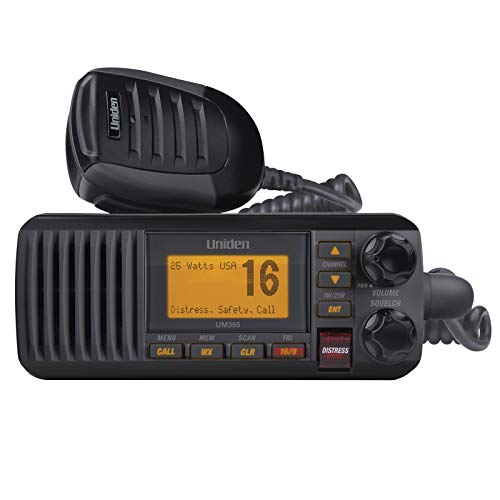 TOP CHOICEBest for budget fixed-mountUniden UM385BK Marine VHF RadioView on Amazon
- 4
 Best for floating handheldCobra BlueBound 350 VHF Handheld Marine RadioView on Amazon
- 5
 Best for submersible backupUniden Atlantis 275 Handheld Two-Way VHF Marine RadioView on Amazon
- 6
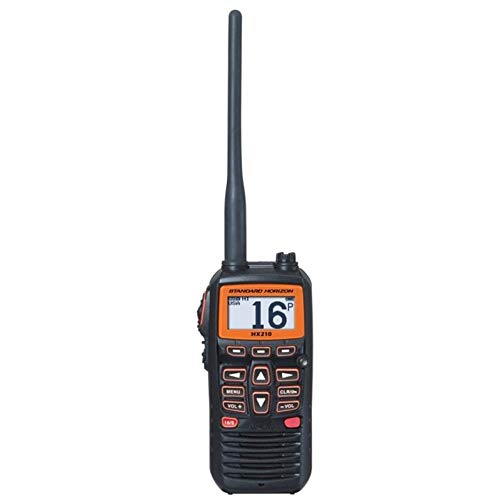 Best for a rugged handheldStandard Horizon HX210 6W Floating Handheld Marine VHF TransceiverView on Amazon
Our Top Picks
| Product | Best for | Key feature |
|---|---|---|
| Uniden UM725G Marine VHF Radio | Helm with navigation data | Built-in GPS, large LCD |
| Uniden UM385 Marine VHF Radio | Fixed-mount helm use | 25 W, DSC distress button |
| Uniden UM385BK Marine VHF Radio | Budget fixed-mount | 25 W, NOAA alerts |
| Cobra BlueBound 350 VHF Handheld | Floating handheld carry | IPX7, floats, USB-C |
| Uniden Atlantis 275 Handheld | Submersible backup radio | IPX8, dual-color screen |
| Standard Horizon HX210 Handheld | Rugged handheld backup | Floating, 6 W output |
Uniden UM725G Marine VHF Radio
Uniden UM725G Marine VHF Radio, All USA, Canada, and Intl. Marine Channels, 1Watt/25Watt Transmit Power, Largest LCD Screen in Class, NOAA Weather Channels w/Alerts, Speaker Mic, GPS Built-in.
Best for: Helm installations where you want radio and navigation data in one place.
This is a fixed-mount unit for boats that already use the helm as a command center. It covers USA, Canadian and international marine channels and offers 1 W and 25 W transmit settings.
Pros
- Built-in GPS for position data on the display
- Large LCD screen for easy reading at the helm
Cons
- Requires a proper antenna and wiring installation
Uniden UM385 Marine VHF Radio
Uniden UM385 Marine VHF Radio, 25-Watt Fixed Mount, IPX4 Waterproof, White | All USA/Intl./Canadian Marine Channels, NOAA Weather Alerts, Triple Watch, DSC (Digital Selective Calling) Distress Button
Best for: Fixed-mount helm use with distress-calling capability.
A straightforward 25-watt fixed unit for sailors who want DSC distress signaling, NOAA weather alerts and triple watch on a dedicated helm radio.
Pros
- DSC distress button for digital selective calling
- Triple watch monitors channel 16 alongside other channels
Cons
- IPX4 rating suits helm mounting, not full immersion
Uniden UM385BK Marine VHF Radio
Uniden UM385BK 25 Watt Fixed Mount Marine VHF Radio, Waterproof, Noaa Weather Alert, All USA/Intl/Canadian Marine Channels
Best for: Budget fixed-mount installs on day boats and small cruisers. 6 Best VHF Marine Radios for Boat Options for Sailors (2026) goes further into this.
This black-finish sibling of the UM385 offers the same 25-watt output and NOAA alerts for owners who want a dependable helm radio without premium features.
Pros
- 25-watt output for good range from the helm
- Waterproof construction suited to open-cockpit mounting
Cons
- Fewer convenience features than the GPS-equipped UM725G
Cobra BlueBound 350 VHF Handheld Marine Radio
Cobra BlueBound 350 VHF Handheld Marine Radio – White, 6-Watt, Floats | Long Range, NOAA Weather Alerts, International Functionality, IPX7 Waterproof, USB-C, Submersible, LCD Screen, Belt Clip
Best for: A floating handheld you can carry on deck, in the dinghy or into the water.
Aimed at paddlers, dinghy sailors and crew who need a portable radio. The listing specifies IPX7 waterproofing, USB-C charging and NOAA weather alerts.
Pros
- Floats if dropped overboard, and IPX7 rated
- USB-C charging simplifies power management
Cons
- 6-watt output has shorter range than a 25-watt fixed radio
Uniden Atlantis 275 Handheld Two-Way VHF Marine Radio
Uniden Atlantis 275 Handheld Two-Way VHF Marine Radio, Floating IPX8 Submersible Waterproof, Large Dual-Color Screen, 6-Watt, All USA/International/Canadian Marine Channels, NOAA Weather Alerts
Best for: A submersible backup radio for life jacket or dry bag carry.
Suited to sailors who want a second radio that survives full submersion. Listing details include IPX8 rating, a dual-color screen and all USA, Canadian and international channels.
Pros
- IPX8 submersible rating, the highest waterproof class listed
- Dual-color screen is easy to read in bright light
Cons
- Handheld range is limited compared with fixed mounts
Standard Horizon HX210 6W Floating Handheld Marine VHF Transceiver
Standard Horizon HX210 6W Floating Handheld Marine VHF Transceiver [HX210]
Best for: A rugged floating handheld from a well-known marine radio brand.
Standard Horizon is a long-established marine electronics maker. The HX210 is a floating 6-watt handheld that owners often pair with a fixed set as a backup.
Pros
- Floating design and a reputable marine electronics brand
- Simple controls suited to quick distress calls
Cons
- Lower output than 25-watt fixed radios
Buying Guide
Fixed Mount vs. Handheld
A fixed-mount radio draws power from your boat’s electrical system and typically offers higher transmit power and a larger antenna setup, which makes it the better choice for hailing other vessels, monitoring weather and handling distress calls from the helm. A handheld is portable, runs on a battery and goes wherever you go, so it suits dinghies, paddling, kayaks and emergency backup. Many boaters carry both, using the fixed unit as the primary radio and the handheld as a grab-and-go companion.
Channel Coverage and Regional Compatibility
Make sure the radio covers the marine channels used in your cruising area. Models labeled for all USA, Canadian and international channels let you travel across borders without swapping equipment. Check that the channel list includes the working channels you expect to use, such as the calling channel and local harbor or bridge frequencies.
NOAA Weather Alerts and Weather Channels
NOAA weather reception with alert tones is valuable for anyone who wants timely warnings about storms, wind shifts and hazardous conditions while underway. Look for radios that receive the weather channels and can be set to sound an alert for the warnings that matter most to you. This feature is especially useful for coastal runs and offshore passages where conditions can change quickly.
Waterproof Rating and Build Quality
Marine electronics live in wet, salty and humid conditions, so the ingress protection rating matters. Units with higher ratings can handle spray and rain, while fully submersible models are designed to float and survive being dropped overboard. Pay attention to the rating printed on the spec sheet and consider how exposed the radio will be on your boat.
Power Output and Digital Selective Calling
Higher transmit power generally extends your effective range, which helps when you need to reach a distant vessel or shore station. Adjustable power settings let you conserve battery on handhelds or reduce interference on busy channels. Digital selective calling (DSC) adds a dedicated distress button that can send your position and alert nearby vessels and rescue services, so it is a meaningful safety feature for offshore and frequently used waters.
FAQ
Do I need a license to operate a marine VHF radio?
Requirements vary by country and by the type of vessel and radio. In the United States, recreational boaters operating domestic VHF radios generally do not need a license for the radio itself, but you should confirm the current rules for your region before heading out. Canadian and international rules differ, so check the regulations that apply where you will be boating.
What is the difference between VHF channels for hailing and working?
Channel 16 is the international calling and distress channel, used to make initial contact with another station. Once contact is established, both parties should move to a working channel to continue the conversation, which keeps the calling channel clear for others. Using the correct channels is an important courtesy and a safety practice on busy waterways.
Is a DSC feature required on my boat?
DSC is not required on every recreational boat, but it is a valuable safety feature because it allows a single button press to send a digital distress alert with your identifying information. Some boaters choose DSC-capable radios even when it is not mandatory, since it can speed up rescue response. Make sure your MMSI number is registered if you use DSC features.
Can a handheld radio replace a fixed-mount unit?
A handheld can serve as a backup or supplement, but it generally has lower transmit power and a shorter effective range than a fixed-mount radio with an external antenna. For primary communication, weather monitoring and distress situations on larger boats, a fixed unit is usually the better choice. Many boaters keep a handheld on board for emergencies and for use away from the boat.
Do I need an external antenna for my radio?
Most fixed-mount radios rely on a properly installed external antenna, and antenna height is one of the biggest factors in range. Mounting the antenna as high and clear as practical improves reception and transmission. Using the correct coaxial cable and connectors also helps preserve signal strength.
How often should I test my marine VHF radio?
It is a good habit to perform a radio check periodically, such as before departure, by contacting a shore station or another vessel and confirming that your transmissions are clear. Inspect the antenna, cable connections and battery as part of your regular maintenance routine. Keeping the radio in good working order helps ensure it will work when you need it most.
Conclusion
For most boats that spend significant time on the water, a fixed-mount radio with strong channel coverage, NOAA alerts and DSC is the best primary choice, and the Uniden UM725G and UM385 models are good examples of that approach. If you want a reliable helm radio on a tighter budget, the UM385BK fits that role, while anyone who needs a portable companion for the dinghy, kayak or cockpit should look at the floating handhelds such as the Cobra BlueBound 350, Uniden Atlantis 275 or Standard Horizon HX210.
Boaters who want both a permanent station and a grab-and-go backup will get the most value from pairing a fixed-mount unit with one of the waterproof handhelds. Match the feature set to your cruising waters, the size of your boat and how you plan to use the radio, and you will end up with the right VHF setup for your needs.
Related reading
- 4 Best Standard Horizon VHF Marine Radios for Boaters (2026)
- VHF Marine Radio Aerials: How to Choose, Mount and Test One (2026)
- Garmin VHF 215 AIS Marine Radio: Setup and Use Guide (2026)
About Graham Fisher
Graham Fisher is part of our editorial team and reviews and edits our sailing gear guides, checking product details against manufacturer specifications and owner feedback.
About the author
Graham Fisher writes reviews and buying guides for Sailing The Web.