West Marine Sailing Boots (2026): Which Should You Choose?
Compare the best west marine sailing boots for dinghy and cruising crews. Key specs, pros, cons and a buying guide to help you pick the right pair.
 By Graham Fisher
Updated November 23, 2026
 By Graham Fisher
Updated November 2026
Choosing west marine sailing boots comes down to four things: grip on wet decks, how well the boot keeps water out, how it fits over a sock, and whether it stays comfortable through a long day on the rail. The six boots below were compared using manufacturer specifications, brand reputation and the patterns owners tend to mention in feedback, including slip resistance, lining, sole design and ankle height. None of them were tested in person for this guide, so check the listing details against your own sailing before you buy.
Our top picks at a glance
- 1TOP CHOICEBest overallGill OS Sailing BootView on Amazon
- 2
 TOP CHOICEBest for cold water and wet dinghy workGill 5mm Neoprene Aero BootsView on Amazon
- 3
 TOP CHOICEBest for cruising and tall-boot coverageGill Tall Yachting BootView on Amazon
- 4
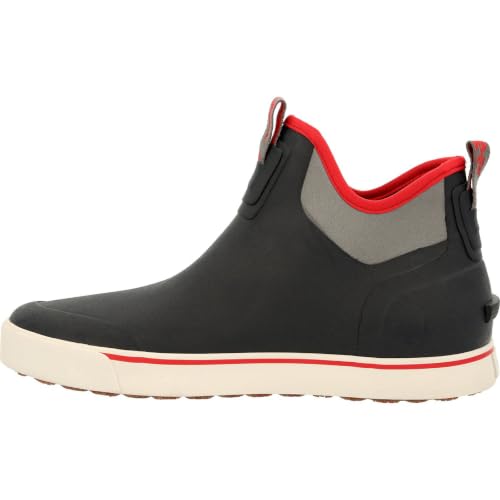 Best for classic deck boot styleROCKY Dry-Strike Waterproof Navy Deck BootView on Amazon
- 5
 Best budget pickLezzglt Mens Deck Boots WaterproofView on Amazon
- 6
 Best for fishing and wet decksBuoy Boots Men's Waterproof Fishing & Deck BootsView on Amazon
Our Top Picks
Quick Comparison
| Product | Best for | Key feature |
|---|---|---|
| Gill OS Sailing Boot | Overall sailing use | Waterproof inner sock and non-marking outsole |
| Gill 5mm Neoprene Aero Boots | Cold water and wet dinghy work | 5mm neoprene construction |
| Gill Tall Yachting Boot | Cruising and tall-boot coverage | Fully rubber, non-slip build |
| ROCKY Dry-Strike Waterproof Navy Deck Boot | Classic deck boot style | Waterproof navy rubber deck boot |
| Lezzglt Mens Deck Boots Waterproof | Budget-minded crews | Rubber ankle booties for wet decks |
| Buoy Boots Men’s Waterproof Fishing & Deck Boots | Fishing and wet deck work | Neoprene lining and EVA foam insole |
Gill OS Sailing Boot
Gill OS Sailing Boot – Waterproof Inner Sock, Non-marking Slip-resistant Outsole, Microfresh Technology (Black, Size 10)
Best for: Overall sailing use on mixed decks
This is a good fit for crews who want one boot for dinghy racing, daysailing and short coastal passages, especially where a waterproof sock liner matters.
Key specs
- Waterproof inner sock
- Non-marking, slip-resistant outsole
- Microfresh technology for odor control, as the listing describes
- Black, size 10 in this listing
Pros
- Waterproof sock keeps feet dry when spray comes over the rail
- Non-marking sole suits deck and cockpit use
- Microfresh lining helps with odor on multi-day trips
Cons
- Sizing can run tight for wide feet, based on common owner feedback
- Less insulation than neoprene options in cold water
Bottom line: Pick this if you want a versatile sailing boot for mixed conditions and value a secure, non-marking grip.
View on AmazonGill 5mm Neoprene Aero Boots
Gill 5mm Neoprene Aero Boots for All Water Sports, Dinghy Sailing, Paddle Sports, Paddleboarding and Surfing.
Best for: Cold water and wet dinghy work
Suited to dinghy sailors, paddlers and anyone who spends time in cold water where body heat retention matters more than a rigid sole.
Key specs
- 5mm neoprene construction
- Designed for dinghy sailing, paddle sports and surfing, per the listing
Pros
- Neoprene insulates well in cold water
- Flexible fit for active movement on a trapeze or hiking position
- Works across several water sports
Cons
- Neoprene can wear faster on abrasive decks than rubber
- Less structured support for long days on a cruising boat
Bottom line: A strong choice for dinghy crews and cold-water sailors who prioritize warmth and flexibility.
View on AmazonGill Tall Yachting Boot
Gill Tall Yachting Boot – Non-Slip 100% Rubber – Cruising Sailing Yachting
Best for: Cruising and tall-boot coverage
Aimed at cruisers and offshore-minded crews who want more ankle coverage and a full rubber build for wet, heavy-use decks.
Key specs
- 100% rubber construction, as stated in the listing
- Non-slip sole
- Tall cut for ankle coverage
Pros
- Full rubber build resists water and abrasion
- Tall cut keeps spray and splashes out of the boot
- Non-slip sole suits wet cockpit work
Cons
- Heavier than lower-cut deck boots
- Can feel warm in hot climates
Bottom line: Best for cruising sailors who want maximum coverage and durability on a wet deck.
View on AmazonROCKY Dry-Strike Waterproof Navy Deck Boot
ROCKY Dry-Strike Waterproof Navy Deck Boot, Dark Navy, Size 7(M)
Best for: Classic deck boot style
A traditional navy deck boot for crews who want a familiar, low-profile look that works on the dock and aboard.
Key specs
- Waterproof construction
- Dark navy colorway
- Size 7 (M) in this listing
Pros
- Familiar deck boot profile suits casual sailing
- Waterproof build for wet conditions
- Works both on and off the boat
Cons
- Less specialized grip data than dedicated sailing brands
- Sizing details should be checked against your usual shoe size
Bottom line: A solid pick for crews who want a traditional navy look and general waterproofing.
View on AmazonLezzglt Mens Deck Boots Waterproof
Lezzglt Mens Deck Boots Waterproof, Rubber Ankle Rain Booties For Fishing | Saltwater High-performance Footwear Chelsea Boots for Gardening Boating Camping Sailing
Best for: Budget-minded crews
Good for sailors who need a waterproof rubber boot for occasional use, dock work and casual trips without investing in a specialist sailing boot.
Key specs
- Rubber ankle booties
- Marketed for fishing, boating and camping
Pros
- Budget-friendly option for occasional sailors
- Rubber build suits wet decks
- Versatile across boating and outdoor use
Cons
- Less specialized sole design than dedicated sailing boots
- Fit and durability details vary in owner feedback
Bottom line: A practical choice for light use and crews testing whether a rubber boot suits their sailing.
View on AmazonBuoy Boots Men’s Waterproof Fishing & Deck Boots
Buoy Boots Men's Waterproof Fishing & Deck Boots, Navy/Orange, Size 11 | Rubber Construction, Neoprene Lining, EVA Foam Insole, Slip-Resistant Non-Marking Outsole for Fishing, Boating & Wet Decks
Best for: Fishing and wet deck work
Built for anglers and boaters who spend long hours on wet, fish-slicked decks and want a supportive insole.
Key specs
- Rubber construction with neoprene lining
- EVA foam insole
- Slip-resistant, non-marking outsole
- Navy/orange, size 11 in this listing
Pros
- EVA insole adds cushioning for long days
- Non-marking outsole suits boat decks
- Neoprene lining adds warmth
Cons
- Bulkier profile than slim sailing boots
- Fishing-oriented design may not suit racing crews
Bottom line: Good for crews who split time between fishing and sailing and want comfort on wet decks.
View on AmazonBuying Guide
Sole grip and non-marking design
Check that the outsole is labeled slip-resistant and non-marking. Non-marking soles protect teak and fiberglass, and a tread pattern with multiple grooves sheds water better than a smooth sole. Test grip on a wet surface before relying on a boot offshore.
Good picks for this: Gill OS Sailing Boot, Buoy Boots Men’s Waterproof Fishing & Deck Boots
Waterproofing and liner construction
Look for a waterproof inner sock or a fully rubber build if you expect spray and standing water. A sealed sock keeps feet dry even when the boot fills at the top, while rubber construction resists water across the whole upper.
Good picks for this: Gill OS Sailing Boot, Gill Tall Yachting Boot
Insulation for your water temperature
Neoprene retains heat in cold water, which matters for dinghy crews and early or late-season sailing. Rubber without lining runs cooler in warm weather and can feel damp when you sweat. Match the lining to the water you sail in most.
Good picks for this: Gill 5mm Neoprene Aero Boots, Buoy Boots Men’s Waterproof Fishing & Deck Boots
Cut height and ankle coverage
A taller cut keeps spray and bilge water out of the top of the boot, which helps on cruising boats and offshore work. A low-cut deck boot is easier to get on and off and feels less restrictive on a dinghy.
Good picks for this: Gill Tall Yachting Boot, ROCKY Dry-Strike Waterproof Navy Deck Boot
Fit, sizing and sock compatibility
Measure your foot length and width and compare against the brand’s size chart rather than your usual shoe size. Wear the socks you sail in when trying boots on. Many owners report that rubber boots feel snug at first, so allow for a small amount of toe room.
Good picks for this: Gill OS Sailing Boot, ROCKY Dry-Strike Waterproof Navy Deck Boot
Durability and everyday wear
Full rubber boots generally handle abrasion and repeated wetting better than lightly built options. Check how the boot is glued or stitched at the sole, and inspect seams after each season. Neoprene can wear faster where it rubs against deck hardware.
Good picks for this: Gill Tall Yachting Boot, Lezzglt Mens Deck Boots Waterproof
Care and drying
Rinse boots with fresh water after saltwater use, let them air dry away from direct heat, and remove insoles so they dry completely. This helps limit odor and extends the life of the lining and glue joints.
Good picks for this: Gill OS Sailing Boot, Buoy Boots Men’s Waterproof Fishing & Deck Boots
FAQ
Are west marine sailing boots the same as deck shoes?
No. Deck shoes are typically lower-cut and lighter, with a lace-up design. Sailing boots usually have a taller, waterproof upper and sometimes a sealed sock. Boots suit wet and cold conditions better, while deck shoes are more comfortable in warm weather.
Do I need neoprene or rubber sailing boots?
It depends on water temperature and how wet you get. Neoprene retains heat well in cold water, while rubber is more durable against abrasion and keeps water out more completely. Many crews own one of each for different seasons.
How should sailing boots fit?
Boots should feel snug around the heel and ankle with enough room in the toe for your sock. Try them on with the socks you actually wear sailing, and check the brand’s size chart before ordering.
Are non-marking soles important?
Yes, if you sail on fiberglass or varnished wood. Non-marking soles avoid black scuffs and help protect deck finishes. They are also commonly designed for better grip on wet surfaces.
How do I keep sailing boots from smelling?
Rinse after use, dry thoroughly, and remove any insoles. Some models include odor-control linings, but drying between uses is still the most effective habit.
Can I wear these boots for fishing or paddling?
Many rubber and neoprene boots work for fishing, paddling and boating, but match the boot to your main activity. Racing crews may prefer a slimmer, lower-profile boot, while anglers may value extra cushioning.
When should I replace sailing boots?
Replace boots when the outsole tread is worn smooth, the sole or upper shows cracks, the lining no longer keeps feet dry, or the boot no longer fits securely. If you are unsure about safety on the deck, a marine retailer or experienced sailor can help you judge condition.
Conclusion
For most sailors, the Gill OS Sailing Boot offers the most balanced mix of waterproofing, non-marking grip and everyday usability. Dinghy crews and cold-water sailors should look at the Gill 5mm Neoprene Aero Boots, while cruisers who want full coverage will likely prefer the Gill Tall Yachting Boot. The ROCKY Dry-Strike suits traditional deck boot style, the Lezzglt works as a budget option for occasional use, and the Buoy Boots fit anglers who also sail. Match the boot to your water temperature, cut height and deck surface, and always check fit against the brand’s size chart.
Sources
- Boating safety guidance, including recommendations for footwear and wet-deck safety on recreational vessels (uscg.mil)
- Water safety and cold-water exposure information relevant to choosing insulated footwear (nps.gov)
- Guidance on cold-water immersion and hypothermia risks for people working on or near water (cdc.gov)
Related reading
- Hamilton Marine Foul Weather Gear: How to Choose the Right Set for Sailing
- West Marine Telescoping Boat Hook: 7 Best Picks for Docking (2026)
- West Marine Inflatable Life Jacket: 5 Best Picks for Boaters (2026)
- West Marine Floating and Telescoping Boat Hook: 5 Best Picks for Docking (2026)
- West Marine Dock Lines: How to Choose and Rig the Right Set (2026)
About Graham Fisher
Graham Fisher is part of our editorial team and reviews and edits our sailing gear guides, checking product details against manufacturer specifications and owner feedback.
About the author
Graham Fisher writes reviews and buying guides for Sailing The Web.