Marine Binoculars with Stabilizers: 6 Best Picks for Boaters (2026)
Comparing marine binoculars with stabilizers for boating and sailing. See six picks, key features, buying factors and who each one suits before you buy.
 By Graham Fisher
Updated November 22, 2026
 By Graham Fisher
Updated November 2026
Choosing marine binoculars with stabilizers comes down to steady viewing on a moving deck, reliable waterproofing, and useful extras like a compass or rangefinder. This list compares six models by the features boaters ask about most: image stabilization, magnification, sealing, and onboard navigation aids.
Our top picks at a glance
- 1TOP CHOICEBest overallCanon 12×36 Image Stabilization III BinocularsView on Amazon
- 2
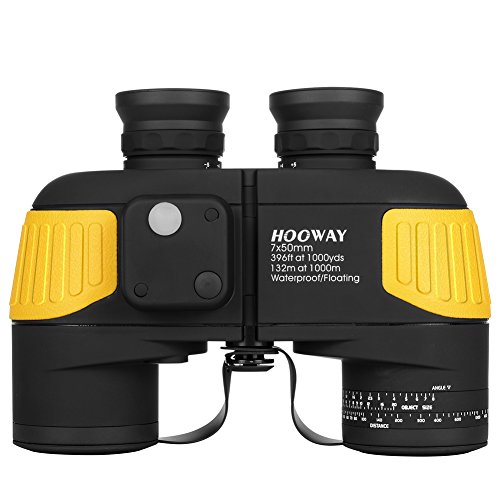 TOP CHOICEBest for navigationHooway 7×50 Waterproof Fogproof Military Marine Binoculars w/InternalView on Amazon
- 3
 TOP CHOICEBest for distant sightingsCanon 18×50 IS Image Stabilized Binoculars (4624A002) BundleView on Amazon
- 4
 Best for high magnificationKite Optics APC Stabilized 12×42 BinocularsView on Amazon
- 5
 Best classic marine designSteiner Marine Binoculars 7×50 for Adults and KidsView on Amazon
- 6
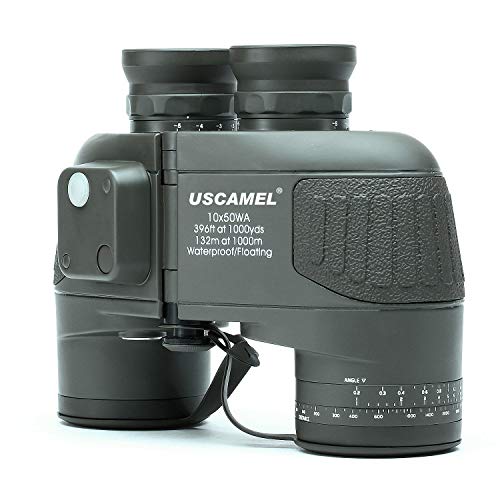 Best budget pickUSCAMEL 10×50 Marine Binoculars for AdultsView on Amazon
Our Top Picks
| Product | Best for | Key feature |
|---|---|---|
| Canon 12×36 Image Stabilization III Binoculars | Overall stabilized viewing | Optical image stabilization |
| Hooway 7×50 Marine Binoculars | Navigation at sea | Built-in rangefinder and compass |
| Canon 18×50 IS Image Stabilized Binoculars | Distant sightings | 18x stabilized magnification |
| Kite Optics APC Stabilized 12×42 Binoculars | High-power marine viewing | 12x stabilization, waterproof body |
| Steiner Marine 7×50 Binoculars | Traditional marine use | Waterproof 7×50 optics |
| USCAMEL 10×50 Marine Binoculars | Budget-minded boaters | Rangefinder and compass |
Canon 12×36 Image Stabilization III Binoculars
Canon 12×36 Image Stabilization III Binoculars
Best for: Overall stabilized viewing
Suits boaters who want the steadiest image on a pitching deck without adding navigation instruments. Its stabilization is the main reason it leads this list.
Pros:
- Optical image stabilization steadies the view in swell
- Compact 36 mm objective keeps weight manageable
Cons:
- No built-in compass or rangefinder
Hooway 7×50 Waterproof Fogproof Military Marine Binoculars with Internal Rangefinder and Compass
Hooway 7×50 Waterproof Fogproof Military Marine Binoculars w/Internal Rangefinder & Compass for Navigation,Boating,Fishing,and More
Best for: Navigation at sea
Fits sailors and powerboaters who want bearings and range estimates in the same tool they use to scan for buoys and other vessels.
Pros:
- Internal compass and rangefinder for quick bearings
- Listed as waterproof and fogproof
Cons:
- Stabilization is not the focus of the design
Canon 18×50 IS Image Stabilized Binoculars (4624A002) Bundle
Canon 18×50 IS Image Stabilized Binoculars (4624A002) Bundle | For Wildlife & Outdoor Viewing | Optical Image Stabilization | Includes Harness + More
Best for: Distant sightings
A good fit for boaters who spend time watching shorelines, wildlife, or distant traffic, and who accept a heavier body for higher magnification.
Pros:
- 18x magnification with optical stabilization
- Listed with a carrying harness
Cons:
- Higher magnification magnifies hand movement, so a steady grip matters
Kite Optics APC Stabilized 12×42 Binoculars
Kite Optics APC Stabilized 12×42 Binoculars – High-Performance Binoculars for Bird Watching, Hunting, Marine Use – 12x Magnification, Image Stabilization, Waterproof, Clear Views
Best for: High-power marine viewing
Works for boaters who want strong magnification with stabilization and a waterproof build, and who also watch wildlife from the water.
Pros:
- 12x magnification with image stabilization
- Listed as waterproof for marine use
Cons:
- Lacks an integrated compass or rangefinder
Steiner Marine Binoculars 7×50 for Adults and Kids
Steiner Marine Binoculars for Adults and Kids, 7×50 Binoculars for Bird Watching, Hunting, Outdoor Sports, Wildlife Sightseeing and Concerts – Quality Performance Water-Going Optics, Black
Best for: Traditional marine use
A solid choice for crews who prefer a conventional marine binocular and do not need stabilization to be built in.
Pros:
- Waterproof 7×50 format suited to low light at sea
- Widely recognized marine design
Cons:
- Not optically stabilized
USCAMEL 10×50 Marine Binoculars for Adults
USCAMEL 10X50 Marine Binoculars for Adults: Binoculars for Sailing Boating | Professional Waterproof Binoculars with Rangefinder Compass for Adults Boating Fishing Navigation Hunting Bird Watching
Best for: Budget-minded boaters
Suits recreational boaters who want rangefinder and compass functions at a lower entry point and can accept less refined optics than premium models.
Pros:
- Rangefinder and compass included
- 10×50 format for a wide field in choppy water
Cons:
- Stabilization is not listed as a feature
Buying Guide
Image stabilization type
Optical stabilization uses a lens-based system that reduces shake, while electronic systems rely on sensor processing. Optical systems are generally the preferred type for marine viewing because they keep image detail sharper.
Magnification versus steadiness
Higher magnification enlarges the view, but it also enlarges motion. For most boat use, 7x to 12x offers a practical balance between field of view and stability.
FAQ
Do marine binoculars with stabilizers really help on a boat?
Yes, image stabilization reduces the shake that comes from waves, wind, and your own movement, which makes distant objects like buoys and shorelines easier to hold in view. The effect is most noticeable at higher magnification, where even small movements become large jumps across the field of view. Stabilized models are especially helpful for anyone scanning from a rocking deck for long periods.
Is a higher magnification always better for boating?
Not necessarily, because higher magnification narrows the field of view and makes it harder to find and track moving targets. Many boaters find that 7x or 10x offers a comfortable balance of brightness, wide view, and steadiness. Higher powers like 12x or 18x are better suited to spotting distant landmarks or wildlife when you can keep the binoculars braced.
What does waterproof and fogproof mean for marine binoculars?
Waterproof models are sealed so that rain, spray, and brief immersion will not let moisture inside the optics. Fogproof models are filled with inert gas, which prevents internal condensation when temperatures change quickly, such as moving from cold air into a warm cabin. Both features matter for saltwater use, where corrosion and fogging can quickly ruin a pair that is not built for it.
Are built-in compasses and rangefinders useful for navigation?
They can be handy for quick reference, such as checking a bearing on a nearby marker or estimating how far away a buoy or harbor entrance is. However, they are supplementary tools and should not replace a dedicated marine compass, chart plotter, or GPS. Always confirm navigation decisions with your primary instruments.
Should I choose a larger objective lens for low-light boating?
A larger objective lens generally gathers more light, which helps at dawn, dusk, and in overcast conditions. The tradeoff is added size and weight, which can be tiring to hold for long stretches on a moving boat. For most recreational boaters, a mid-sized lens is a practical compromise.
Do I need a harness or strap for marine binoculars?
A neck strap or harness is strongly recommended on a boat, since dropping binoculars onto a deck or into the water is a common and costly mistake. Some bundles include a harness, which can keep the optics close and easy to reach while you work the helm or handle lines. Choose a strap with secure attachment points that will not loosen with spray or movement.
Conclusion
If steadiness on a moving deck is your top priority, the stabilized Canon and Kite Optics models are the strongest fits, with the Canon 12×36 suited to general boating and the 18×50 better for long-range viewing when you can brace. Boaters who want built-in navigation aids and a rugged, sealed build will find the Hooway and USCAMEL models practical choices.
For a dependable all-round pair that balances brightness, field of view, and easy handling, the Steiner 7×50 is a solid option, particularly for mixed use on the water and ashore. Match your choice to how you boat, and you will get the most value from the features that matter most to you.
Related reading
- West Marine Telescoping Boat Hook: 7 Best Picks for Docking (2026)
- West Marine Floating and Telescoping Boat Hook: 5 Best Picks for Docking (2026)
- West Marine Dock Lines: How to Choose and Rig the Right Set (2026)
About Graham Fisher
Graham Fisher is part of our editorial team and reviews and edits our sailing gear guides, checking product details against manufacturer specifications and owner feedback.
About the author
Graham Fisher writes reviews and buying guides for Sailing The Web.