Standing Rigging for Sailboat: 7 Best Tension Gauges Compared (2026)
Compare seven standing rigging for sailboat tension gauges. See which tools suit wire sizes, load ranges and hands-free use before you buy.
 By Owen Palmer
Updated November 22, 2026
 By Owen Palmer
Updated November 2026
Choosing the right standing rigging for sailboat maintenance usually starts with one tool: a tension gauge that reads cable load accurately across the wire sizes you actually have aboard. This list focuses on tension gauges and rigging references, ranked by how well they match common shroud and forestay diameters, load range, ease of one-handed use, and clarity of the owner feedback patterns that show up most often.
Our top picks at a glance
- 1TOP CHOICEBest overallPT-1 Rigging Tension Gauge for SailboatsView on Amazon
- 2
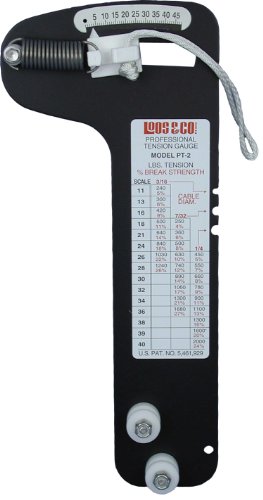 TOP CHOICEBest for a hands-free readingLoos & Co. Sailboat Rigging Tension Gauge, PT-2 Professional Hands-Free Force GaugeView on Amazon
- 3
 TOP CHOICEBest for 2.5–4 mm cableTouri Sailboat Rigging Tension Gauge, PT-1M Professional ToolView on Amazon
- 4
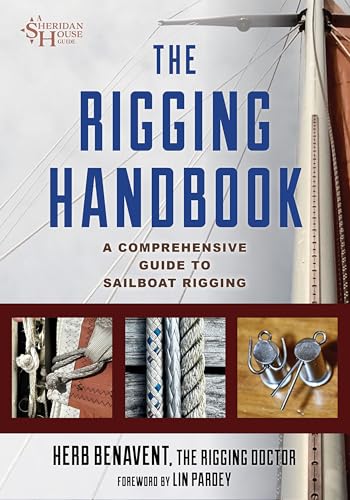 Best for learning the theoryRigging Handbook (Sheridan House Guides)View on Amazon
- 5
 Best for a stainless cable testerSivlyre Professional Sailboat Rigging Tension GaugeView on Amazon
- 6
 Best for larger rigsPT-3 Hands‑Free Rigging Tension Gauge,Professional Force Meter for TenView on Amazon
- 7
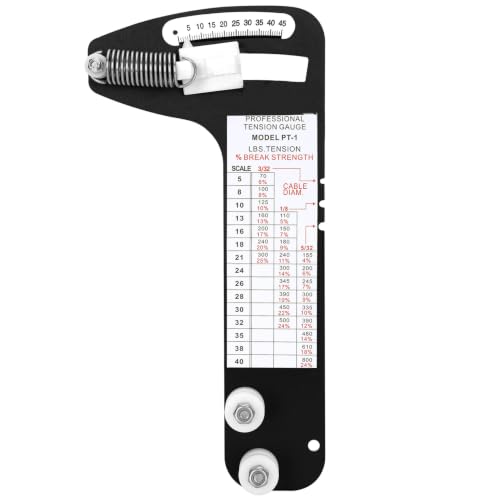 Best for 3/32" to 5/32" wirePT-1 Sailboat Rigging Tension Gauge, Professional Wire Rope Standing RiggingView on Amazon
Our Top Picks
Quick Comparison
| Product | Best for | Key feature |
|---|---|---|
| PT-1 Rigging Tension Gauge for Sailboats | Overall use on common shrouds | 70–800 lb range |
| Loos & Co. PT-2 Sailboat Rigging Tension Gauge | Hands-free reading | 2,000 lb capacity |
| PT-1 Sailboat Rigging Tension Gauge (hands-off) | 3/32″ to 5/32″ wire | Hands-off design |
| Touri PT-1M Sailboat Rigging Tension Gauge | 2.5–4 mm cable | Metric cable sizes |
| Rigging Handbook (Sheridan House Guides) | Learning rigging theory | Reference book format |
| Sivlyre Sailboat Rigging Tension Gauge | Stainless cable checks | Stainless steel build |
| PT-3 Hands-Free Rigging Tension Gauge | Larger shrouds and forestays | 4,500 lb capacity |
PT-1 Rigging Tension Gauge for Sailboats
PT-1 Rigging Tension Gauge for Sailboats, Professional Wire Rope Tension Gauge for 3/32", 1/8" & 5/32" Cables, 70-800 lb Standing Rigging Meter
Best for: Overall use on common shroud sizes
This is a practical pick for owners who need one gauge covering a typical range of sailboat wire diameters and loads.
Pros
- Covers 3/32″, 1/8″ and 5/32″ cables
- Rated 70–800 lb
Cons
- Load range is narrower than heavy-duty models
Loos & Co. Sailboat Rigging Tension Gauge, PT-2 Professional Hands-Free Force Gauge
Loos & Co. Sailboat Rigging Tension Gauge, PT-2 Professional Hands-Free Force Gauge, Cable Rigs, Wire Rope Standing Rigging, and Forestays, for 3/16, 7/32, and ¼ inch Cable Diameter, 2000 lbs
Best for: Hands-free reading on 3/16″ to 1/4″ cable
Suited to owners who want to read tension without holding the gauge in one hand while tightening with the other.
Pros
- Designed for hands-free use
- 2,000 lb capacity for heavier rigs
Cons
- Bulkier than compact handheld gauges
PT-1 Sailboat Rigging Tension Gauge, Professional Wire Rope Standing Rigging
PT-1 Sailboat Rigging Tension Gauge, Professional Wire Rope Standing Rigging for 3/32", 1/8", 5/32" Diameter Wire Cable, Hands-Off Accurate Rigging Tool Rated up to 800 lb, for Sail Rigging
Best for: 3/32″ to 5/32″ wire on smaller boats
A good match for dinghies and small cruisers with lighter standing rigging that needs careful, repeatable tuning.
Pros
- Hands-off reading design
- Rated up to 800 lb
Cons
- Not suited to very large cable diameters
Touri Sailboat Rigging Tension Gauge, PT-1M Professional Tool
Touri Sailboat Rigging Tension Gauge, PT-1M Professional Tool, 800 Lb | Accurate Rigging for Optimal Sail Performance, Wire Rope Standing for 2.5 3 and 4 Milimeter Cable Diamete
Best for: 2.5–4 mm metric cable
Useful for boats with metric-sized wire, where imperial gauges may not fit the cable correctly.
Pros
- Metric cable diameters
- 800 lb rating
Cons
- Limited appeal for imperial-only rigs
Rigging Handbook (Sheridan House Guides)
Rigging Handbook (Sheridan House Guides)
Best for: Learning rigging theory and terminology
A reference for owners who want to understand why tension and fittings behave the way they do before adjusting anything.
Pros
- Explains rigging principles clearly
- Useful reference shelf item
Cons
- Does not measure tension
Sivlyre Professional Sailboat Rigging Tension Gauge
Sivlyre Professional Sailboat Rigging Tension Gauge, Wire Rope Cable Tension Meter Tool for Standing Rigging, Stainless Steel Cable Tension Tester for Sailboats, Structural Wire Systems
Best for: Stainless steel cable checks
Aimed at owners who want a stainless-built tester for routine checks on stainless standing rigging.
Pros
- Stainless steel construction
- Works with structural wire systems
Cons
- Fewer owner feedback reports than the leading PT models
Buying Guide
Cable Diameter Range
Before you buy, measure the wire diameter of your shrouds and forestay. Many gauges are built for a specific range, such as 3/32″ to 5/32″, while others cover larger sizes like 9/32″ to 3/8″. A gauge that does not fit your cable will give you unreliable readings or may not clamp at all.
Load Range
Check that the gauge’s maximum rated load comfortably exceeds the tension you plan to apply. Smaller-boat rigs may only need a tool rated to a few hundred pounds, while larger keelboats can require gauges rated into the thousands. Choosing a tool with headroom helps you avoid overloading it during tuning.
Hands-Free or Hands-On Operation
Some gauges clamp onto the cable and let you read the tension while you adjust the turnbuckle with both hands free, which is helpful when you are working alone on the mast or deck. Others require you to hold the tool in line with the wire, which can be workable but takes more coordination. Think about how you usually tune your rig before deciding.
Ease of Reading and Build Quality
Look for a clear, easy-to-read display or dial, and a body made from corrosion-resistant material such as stainless steel or hardened alloy, since salt exposure is hard on rigging tools. A sturdy construction and a readable scale make it easier to set tension consistently from one shroud to the next.
Use Case and Reference Material
If you are mainly tuning a single boat, a dedicated tension gauge is usually enough. If you are new to rigging or want background on tuning, a reference book can complement the tool by explaining how tension, rake, and mast bend interact. Match your purchase to how much hands-on rigging work you expect to do.
FAQ
What is a sailboat tension gauge used for?
A tension gauge measures the load in a standing rigging wire so you can tune shrouds and forestays to the correct tension. Setting tension evenly helps keep the mast straight and the rig performing as the designer intended. It is a key tool for routine rigging checks.
Do I need a gauge that matches my exact cable size?
Yes, in most cases you should choose a gauge that fits your cable diameter. Tools are designed for specific wire ranges, and a mismatch can lead to inaccurate readings or an unsafe fit. Measure your wire before ordering.
How often should I check standing rigging tension?
Many sailors check tension at the start of each season and after any major sail changes or rig adjustments. Wire can stretch and fittings can settle over time, so periodic checks help maintain balance. Your rigging manufacturer’s guidance is a good starting point for your boat.
Can a beginner use these tension gauges?
Beginners can use most of these tools with some practice, especially hands-free models that make reading tension easier. It helps to learn the basics of rig tuning first so you know what target readings and adjustments make sense. A reference guide can be useful for that learning curve.
Should I replace rigging wire if the tension gauge shows it is loose?
A low reading does not automatically mean the wire needs replacing; it often just needs tightening through the turnbuckle or adjustment fitting. However, inspect the wire, swages, and fittings for corrosion, broken strands, or fatigue. If you find damage, have a rigging professional evaluate the components.
Conclusion
If you want a focused, straightforward tension gauge for common shroud sizes, the PT-1 type models are a practical starting point for most owners of smaller to mid-sized boats. Choose the gauge whose cable range and load capacity match your own rig, and consider a hands-free design if you often work alone.
For larger rigs with heavier wire, a higher-capacity hands-free gauge or a professional-grade model will serve you better, while owners who want to learn the fundamentals of tuning may benefit from pairing a tool with a rigging reference book.
Related reading
- Parts of a Sailboat Rigging: A Guide to Standing and Running Rigging
- Rigging a Laser Sailboat: 3 Best Blocks and Parts Compared
About Owen Palmer
Owen Palmer is part of our editorial team and reviews and edits our sailing gear guides, checking product details against manufacturer specifications and owner feedback.
About the author
Owen Palmer writes reviews and buying guides for Sailing The Web.